
When Miami Beach Smells Like a Winery in Fall
October 25, 2026 · By Stephen Joos
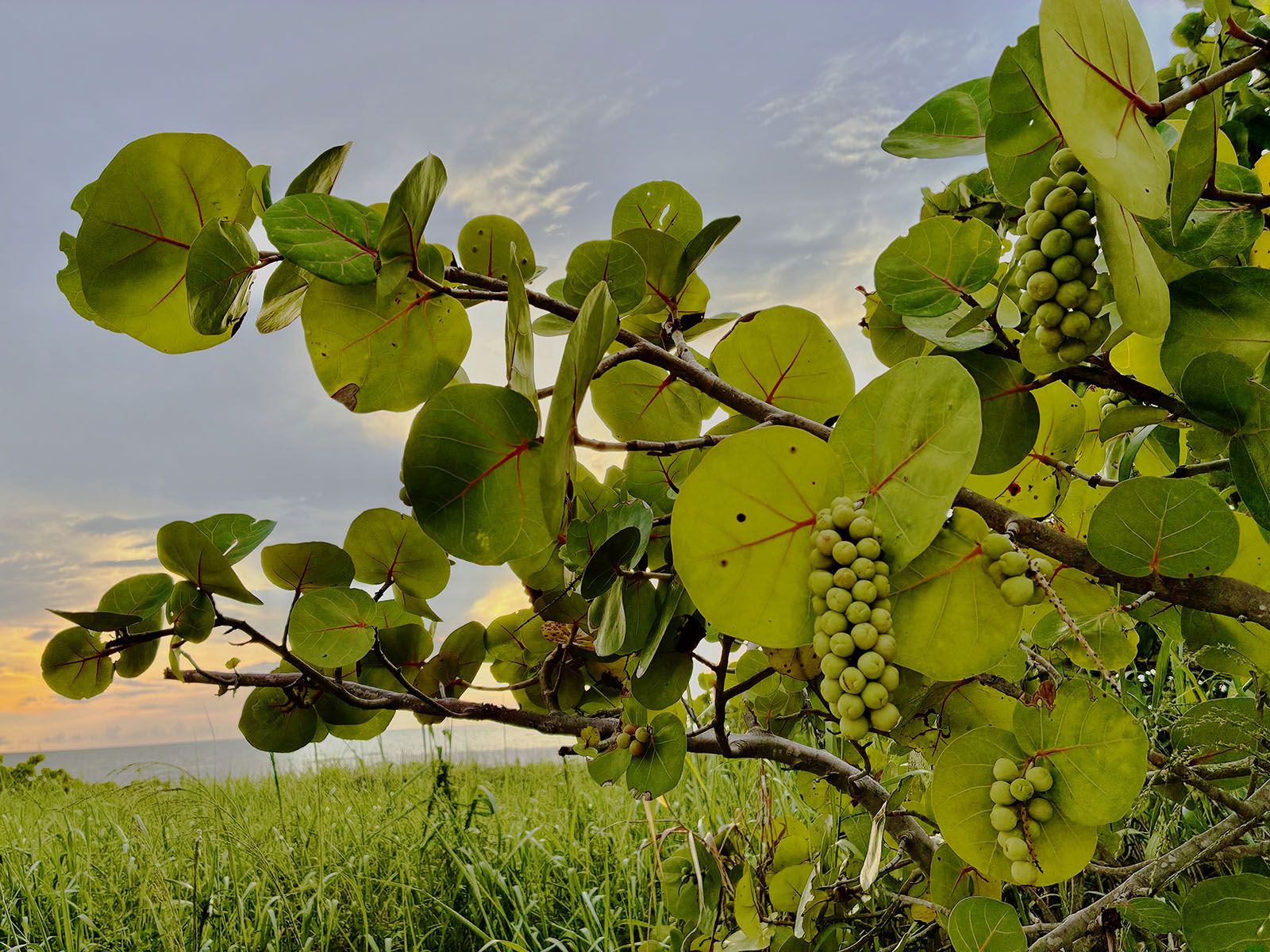
Sea grapes, wild fermentation, and the unmistakable scent of fall along the Beachwalk.
Every year, as summer gives way to fall, a particular smell begins appearing along Miami Beach.
It is sweet, fruity, and unmistakably alcoholic. Walking along the Miami Beach Beachwalk, the oceanside path many still casually call the boardwalk, can suddenly feel less like a stroll along the Atlantic and more like passing through a winery during harvest.
The source is underfoot.
Sea grapes ripen from late August through October, turning from green to reddish purple before dropping from the dense coastal vegetation onto the pavement below. In Miami's heat, the fallen fruit is crushed by bicycles, shoes, maintenance carts, and gravity. Juice collects on the warm ground. Microorganisms find the sugar.
And fermentation begins.
For a few weeks, one of Miami Beach's most characteristic plants becomes responsible for one of its most unusual seasonal smells.
The Grape That Isn't a Grape
The sea grape's scientific name is Coccoloba uvifera. It is native to Florida, the Caribbean, and other tropical parts of the Americas, and is particularly well adapted to beaches and coastal dunes. Its thick, almost circular leaves tolerate salt spray and intense sun, while its roots help stabilize coastal sand.
Despite the name, and the convincing clusters of fruit, it isn't closely related to the grapes used to make Cabernet or Chardonnay. Sea grape belongs to the buckwheat family, Polygonaceae.
The species name uvifera essentially means "grape-bearing."
Sea grapes generally grow on separate male and female plants, with female plants producing dangling clusters of small fruit that mature to deep purple in late summer and early fall. Not every sea grape along the beach produces fruit.
The fruit itself is edible. There is relatively little flesh surrounding a large seed, but what is there is juicy, tart, and sweet when ripe. Sea grapes have traditionally been eaten fresh and made into jellies and preserves.
They have also been fermented.
In parts of the Caribbean, sea grapes have been used to make wine and other alcoholic beverages. The fruit can be crushed and fermented, sometimes with additional sugar, producing a distinctly tropical fruit wine.
In other words, the smell appearing naturally on Miami Beach isn't far removed from something people have deliberately done with the fruit for generations.
##Winery on the Pavement
Fruit is essentially a package of water, sugar, acids, and aromatic compounds.
Once a ripe sea grape splits open, naturally occurring microorganisms gain access to that sugar. Yeasts can metabolize sugars and produce ethanol and carbon dioxide, the basic transformation behind beer, wine, cider, and countless other fermented drinks.
But ethanol alone doesn't smell like a winery.
Fermentation creates an entire family of volatile organic compounds, or VOCs, alongside it. Among the most important are esters, molecules that often smell distinctly fruity.
Wine yeasts can produce compounds such as ethyl acetate, isoamyl acetate, ethyl hexanoate, and ethyl octanoate. Depending on their concentration, these can suggest everything from generic ripe fruit to banana, pear, apple, and floral notes.
That helps explain the strange familiarity of the sea grape smell.
You may never have smelled fermenting sea grapes before, yet your brain recognizes the chemistry.
What You're Actually Smelling
The aroma around fallen sea grapes is probably not attributable to one molecule. It is better understood as a small cloud of fermentation-related VOCs. Without directly sampling the air, we can't know the precise chemical composition, but several familiar compounds are likely candidates.
| Compound | Characteristic scent |
|---|---|
| Ethanol | Warm, alcoholic, wine-like |
| Ethyl acetate | Fruity, sweet, slightly solvent-like |
| Isoamyl acetate | Banana, pear, ripe fruit |
| Ethyl hexanoate | Green apple, fruity |
| Ethyl octanoate | Sweet fruit, pear, tropical notes |
| Acetic acid | Vinegar, sour, sharp |
| Acetaldehyde | Green apple, bruised fruit, pungent |
These compounds are not unique to sea grapes. They are part of the broader chemical vocabulary of fermentation, and their presence and proportions will vary with the fruit, microorganisms, temperature, and stage of decomposition.
Ethyl acetate is particularly interesting. It is common in fermented fruit and wine and can smell simultaneously fruity and slightly solvent-like. At low concentrations, it contributes brightness and fruitiness. At higher concentrations, it begins moving toward nail-polish remover.
Acetic acid may become more prominent as fermentation progresses. Acetic-acid bacteria can convert ethanol into acetic acid in the presence of oxygen, shifting the aroma from wine toward vinegar.
And beneath all of it remains the smell of the fruit itself: sweet, tart, slightly green, and increasingly overripe.
The result isn't necessarily the polished aroma of a glass of wine. It is closer to a winery during production: spilled juice, fermenting fruit, alcohol, esters, and a little volatile acidity.
Why Fermentation Smells So Familiar
This is why very different places can occasionally smell strangely alike.
A brewery during fermentation. A winery at harvest. Fallen apples beneath a tree. Overripe fruit behind a market. A bruised pile of tropical fruit. Even a forgotten container of juice beginning to ferment.
They share pieces of the same chemical vocabulary.
Yeasts metabolizing sugar repeatedly produce ethanol, higher alcohols, acids, and esters. The fruit changes, but some of the aromatic products of fermentation remain remarkably consistent.
Wine researchers sometimes describe the common fermentation-derived portion of wine aroma as its vinous character, distinct from the particular aromas contributed by the grape variety.
Sea grapes therefore don't have to be wine grapes to smell like wine when they ferment.
The microorganisms are doing similar work.
A Miami Beach Vintage
Sea grapes are so visually embedded in Miami Beach that they can become almost invisible: big leathery leaves forming walls along the dunes, twisted trunks beside beach entrances, purple fruit hanging above the path.
Their smell makes them noticeable again.
For most of the year, the plants contribute little noticeable aroma from a distance. Then late summer gives way to fall. Fruit ripens. Storms and wind knock clusters loose. Purple skins split against hot pavement. Juice stains the path. Over time, the sweet fruit begins changing.
Unlike the crisp leaves and woodsmoke that announce autumn farther north, Miami Beach has its own seasonal markers. The sea grape harvest is one of them, although the exact timing varies with weather and local growing conditions.
And for a short period between summer and fall, the Beachwalk develops an aroma that belongs almost entirely to that moment.
Salt air.
Hot pavement.
Overripe fruit.
Ethanol.
Esters.
A little vinegar.
Miami Beach, temporarily, smells like it's making wine.